Marketing has changed. For years, businesses relied on automated systems that followed fixed rules to send messages and guide customers. It worked, but it was rigid.
Now, customers jump between channels. They change their minds quickly. They want answers right now.
AI is changing how this works. Instead of following preset rules, AI watches what customers do and responds instantly. Every message adjusts based on real behavior, not guesses. This shift has made the artificial intelligence customer journey more flexible and human-like, improving the overall AI customer experience across touchpoints.
According to Salesforce, 80% of customers say the experience a company provides is as important as its products or services.
The results? Better conversations. Stronger relationships. More sales.
What is an AI customer journey?
An AI based customer journey is a path you design, but AI runs it. The system monitors every customer’s movement and adjusts the experience in real time, creating an intelligent customer journey instead of a fixed flow.
Think of it this way: traditional marketing sends the same email to everyone who abandons a cart. AI sends different messages based on what each person looked at, how long they stayed, and what they’ve bought before. This is how customer journey AI works in real life.
AI learns from every interaction. It studies patterns across thousands of customers, then applies that knowledge to personalize each experience. This creates journeys that feel personal because they are.
Over time, customers get better service. You get better results. Everyone wins.
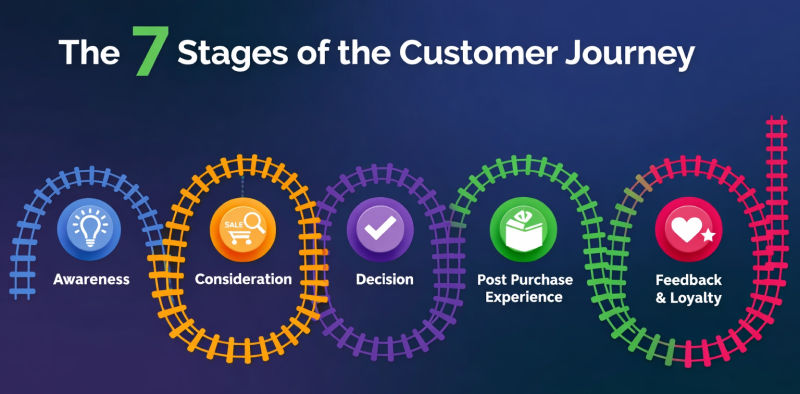
7 stages of the AI customer journey
Customers won’t always tell you what they want. But they’ll definitely show you what they don’t want. Pay attention to their actions, and you’ll understand them better.
Here’s how AI transforms each stage of the journey.
1. Awareness
People at this stage are curious. They’re browsing, looking around, maybe not even sure what they need yet.
You can’t have a human agent talk to every visitor. That’s expensive, and most won’t buy anyway.
AI steps in here. It watches how people behave on your site or app. Where they click. What they read. How long they stay. This behavior tracking is the foundation of an artificial intelligence customer journey.
A chatbot can pop up with a helpful suggestion (not annoying, actually helpful). Or it might show content related to what they’re viewing. This catches their attention without overwhelming them.
2. Consideration
Now they’re comparing options. Looking at your products against competitors. Reading reviews. Checking prices.
You can tell they’re considering you when they come back multiple times. When they spend more time on product pages. When they start reading detailed specs.
AI tracks these signals. It knows which products they’ve looked at and can suggest similar items they might’ve missed. Or it can answer questions through a chat before they even ask (based on what other similar customers wanted to know).
The goal is to help them decide without pushing too hard.
Note: HubSpot found that businesses using AI-powered recommendations improve lead engagement by over 50%.
3. Decision
They’re ready to buy. They just need the last bit of information or a smooth checkout process.
AI makes this easy. Chatbots can pull up product catalogs with images and prices. They answer last-minute questions instantly (like shipping times or return policies), a key benefit of generative AI customer service in action.
Some AI platforms even track how people interact with these messages. If someone’s hesitating at checkout, the system can offer help right then.
AI customer journey: The purchase
4. Sale
AI keeps the buying process smooth. It guides people through payment, confirms orders, and sends receipts automatically.
Virtual assistants can handle questions during checkout (like “Can I change my shipping address?”). This removes friction right when it matters most.
AI customer journey: After the sale
5. Post-purchase experience
They bought something. Now they want to get the most out of it.
AI looks at what they purchased and suggests related products. Not random stuff, but items that actually complement their purchase.
It also helps with onboarding. If someone bought software, AI can send step-by-step guides. If they bought a physical product, it might share tips for getting started using AI tools for customer service.
For customers who aren’t using what they bought, AI can send reminders or helpful resources. It also requests feedback at the right time (not too soon, not too late).
6. Customer support and service
Something’s wrong, or they have questions. They need help fast.
Bad customer service kills retention. People leave when they can’t get answers.
AI-powered chatbots handle common questions instantly. Across any channel (website, app, social media, messaging). For complex issues, they hand things over to a human agent with full context so customers don’t repeat themselves.
AI also helps the human agents. It pulls up customer history, suggests solutions, and recommends knowledge base articles. This cuts wait times dramatically (sometimes by 30% or more).
7. Feedback and loyalty
They’re thinking about their overall experience. Deciding if they’ll stick around or leave.
AI collects feedback through surveys across different channels. It analyzes the responses to understand sentiment (are people happy, frustrated, neutral?). This data-driven insight improves AI customer journey mapping over time.
Then it groups customers:
- Loyal customers who keep coming back
- High-value customers are worth extra attention
- At-risk customers who might leave soon
- Customers are likely to respond to promotions
This lets you treat different groups differently. You might send a discount to someone thinking about leaving. Or a thank-you gift to your most loyal customers.
AI can even predict satisfaction scores based on conversation tone and behavior. You don’t have to wait for survey responses to know something’s wrong.
9 ways to optimize AI customer journey for businesses
Here’s how to make your AI customer journey actually work.
1. Personalized recommendations
AI predicts what customers want before they even know it. It studies past behavior, browsing patterns, and purchase history.
This means showing the right products to the right people. Not bombarding everyone with the same offers.
You spend less money on marketing that doesn’t work. You make more sales from marketing that does. Win-win situation.
2. Intelligent chatbots and virtual assistants
Put AI chatbots on your website, app, and messaging channels. They answer questions 24/7, even when your team’s asleep.
These bots don’t just respond with canned answers. They understand context, guide people through purchases, and solve problems.
3. AI-powered workforce planning
AI figures out when you’ll be busy based on past data. It schedules the right number of agents with the right skills at the right times.
This means customers don’t wait as long. Agents aren’t overwhelmed during rushes or bored during slow periods.
AI forecasting also predicts future demand, so you can prepare ahead of time.
4. Consistent experience across channels
Someone starts a chat on your website. Continue it on your app. Gets a follow-up email. Everything stays connected.
AI makes sure customers don’t repeat themselves. The system remembers context across every touchpoint.
Advanced systems even route customers to agents based on skills. Complex technical questions go to technical experts. Simple questions get answered by bots or less experienced agents.
5. Real-time analytics for quick decisions
AI monitors conversations as they happen. It spots patterns, identifies problems, and measures what’s working.
You can adjust your approach on the fly instead of waiting weeks to review reports.
This keeps you responsive to what customers actually need right now.
6. Automated follow-ups
Customer contacts you with a problem. AI automatically schedules a follow-up call at the best time.
Predictive dialers manage call volumes and agent availability. They dial numbers automatically and connect agents to live calls more often.
This reduces wasted time and ensures customers get called back when promised.
7. Support in multiple languages
AI provides support in different languages automatically. This removes language barriers for global customers.
People get help in their preferred language without you hiring multilingual staff for every language.
8. Self-service knowledge base
AI creates and maintains help articles, FAQs, and troubleshooting guides. It powers search so customers find answers fast.
Most people prefer solving problems themselves if it’s easy enough. A good knowledge base lets them do that.
9. Visual troubleshooting
The customer has a problem with a product. They take a photo with their phone. AI analyzes the image and suggests solutions.
This works great for technical issues or assembly problems. It’s faster than describing the problem in words and more accurate.
AI is changing customer journeys from start to finish. The technology adapts to each person, learns from every interaction, and gets better over time. Specialized AI models combined with advanced capabilities create experiences that feel personal because they are.
No Spam. No calls. Unsubscribe anytime.
Conclusion
AI customer journeys aren’t just automated versions of old processes. They’re fundamentally different.
Instead of treating everyone the same, AI personalizes every interaction. Instead of following rigid rules, it adapts in real time. Instead of guessing what customers want, it learns from their behavior.
The stages stay familiar (awareness, consideration, decision, purchase, post-purchase, support, loyalty). But AI transforms how customers move through each one.
The goal isn’t replacing human connection. It’s using AI to create more meaningful connections at scale. Customers get better experiences. You get better results.
That’s the promise of AI customer journeys. And it’s happening right now.
Frequently Asked Questions