
Running a travel business without proper software is like trying to book flights with a paper map. You need the right tools to handle bookings, payments, and customers without losing your mind.
The problem? Everyone claims they’re the best. After testing dozens of options, we’ve narrowed it down to 11 tour agency software that actually deliver.
These platforms make booking management simple, help you earn more money, and grow with your business. They’re user-friendly enough that you don’t need a computer degree to figure them out. Many of them also work as a Business management system and travel agency CRM to manage both customers and operations efficiently.
Best Use Cases for Each Tour Agency Software
1. TripCart: Best for tour agencies that want full control over bookings without paying any booking commissions.
2. Peek Pro: Best for small or seasonal tour operators who want to pay only when they get bookings instead of monthly fees.
3. WP Travel Engine: Best for WordPress users who want to add tour booking features to their existing website at a low cost.
4. Bokun: Best for tour operators who want to sell their tours on Tripadvisor and Viator with real-time availability syncing.
5. Rezdy: Best for agencies that work with travel agents and resellers and want global marketplace distribution.
6. Tashi: Best for travel businesses that create custom itineraries and want bookings, proposals, and customer communication in one system
7. FareHarbor: Best for activity and tour businesses that prefer commission-based pricing and sell through multiple booking channels.
8. TripWorks: Best for tour agencies that want booking management plus built-in marketing and customer follow-ups.
9. We Travel: Best for tour agencies that want booking management plus built-in marketing and customer follow-ups.
10. TrekkSoft: Best for tour agencies that want booking management plus built-in marketing and customer follow-ups.
11. Lemax: Best for large or complex travel businesses that need automation for packages, quotes, payments, and operations.
11 Best Tour Agency Software
1. Tripcart
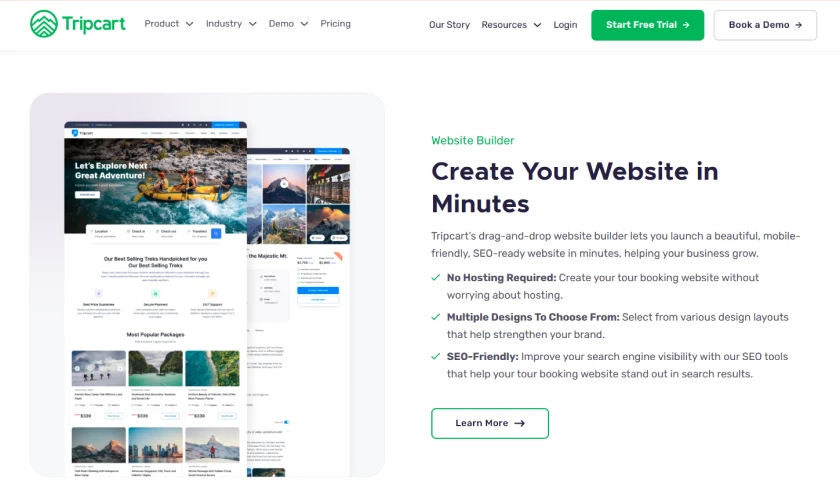
Tripcart sits at number one because it covers everything travel agencies need without the usual headaches.
It’s built specifically for tour businesses that want to get online quickly. You don’t pay commissions on bookings, just a monthly subscription. That alone saves serious money compared to platforms that take a cut of every sale.
Here’s what caught our attention: customers get their own dashboard where they can check bookings, make payments, and manage trip details using their tour agency software. No more endless emails back and forth.
The website builder comes with free hosting (saving you another monthly bill). You can create discount codes for holidays or slow seasons. The 30-day trial doesn’t ask for credit card info upfront.
What makes Tripcart worth considering:
Website builder included: Get your booking site running fast with SEO tools built in. No coding knowledge required.
Handle unlimited tour packages: Create day trips or week-long adventures. Add extras like meals or equipment rentals to increase what customers spend.
Payment processing: Accept money from anywhere in the world. Tripcart doesn’t take any percentage of your sales.
Team features: Give your staff access to what they need while keeping sensitive information protected.
Add-ons for more revenue: Offer premium services or upgrades during checkout.
Email automation: Send reminders to people who started booking but didn’t finish, plus confirmations for completed reservations.
Clear pricing breakdown: Show customers exactly what they’re paying for (builds trust).
Dashboard analytics: See which tours sell best, track revenue, and understand your customers using your tour agency software.
2. Peek Pro
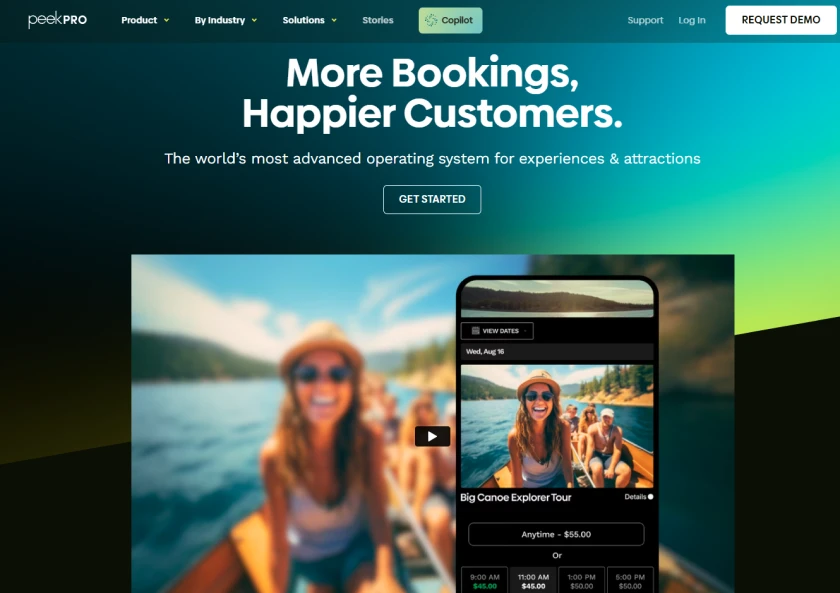
Peek Pro works differently than most booking platforms. Instead of monthly fees, you pay a small amount per booking. If nobody books, you pay nothing.
This makes it perfect for newer agencies or seasonal businesses. You’re not stuck paying subscription fees during slow months.
The system handles online bookings, walk-in customers, and stores all customer information in one place. The mobile point-of-sale app means you can take bookings and payments anywhere (at festivals, tourist spots, wherever).
Key features:
Customizable booking widget: Add it to your website so customers can book directly.
Mobile POS: Take bookings and process payments on your phone or tablet. Great for on-location sales.
Customer database: Save guest details, add notes about preferences, and keep track of all communications.
Dynamic pricing: Adjust prices based on demand, season, or how full a tour is.
Marketing connections: Link to your advertising channels and see detailed reports on what’s working.
3. WP Travel Engine
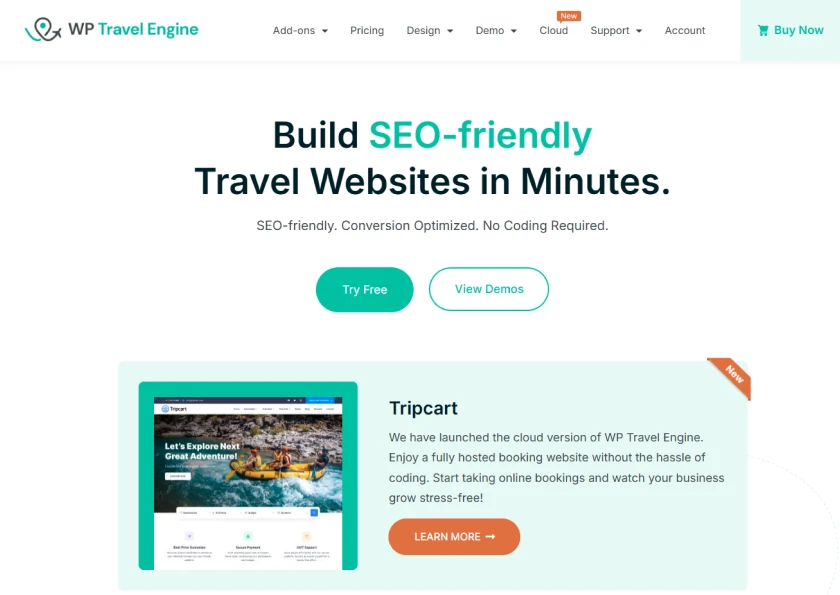
WP Travel Engine is a WordPress plugin that turns any WordPress site into a booking platform with tour agency software capabilities. The basic version costs nothing.
If you already have a WordPress website, this is the easiest way to add booking functionality. No need to learn a completely new system or migrate your site elsewhere.
The free version includes unlimited tours, detailed itineraries, and trip search. When you need more features, add premium extensions. You only pay for what you actually use.
It works with multiple payment processors and lets customers filter tours by location, dates, and budget. The interface works in different languages, so you can serve international travelers.
What WP Travel Engine offers:
Fast loading speeds: Built for performance so your site doesn’t slow down.
Unlimited tours: List as many trips as you want with photos, descriptions, pricing, and FAQs.
Step-by-step checkout: Makes booking easy for customers. Connects with WooCommerce and other payment systems.
Search and filter: Customers find trips by destination, dates, price range, and other criteria.
Works in multiple languages: Serve customers worldwide with translation support and SEO-friendly structure.
Premium add-ons: Add features like group discounts, tiered pricing, weather information, and payment plans as you grow.
Flexible pricing plans: Start small and upgrade when you need more.
Booking reports: Track reservations and understand customer behavior with clear analytics using your tour agency software.
4. Bokun
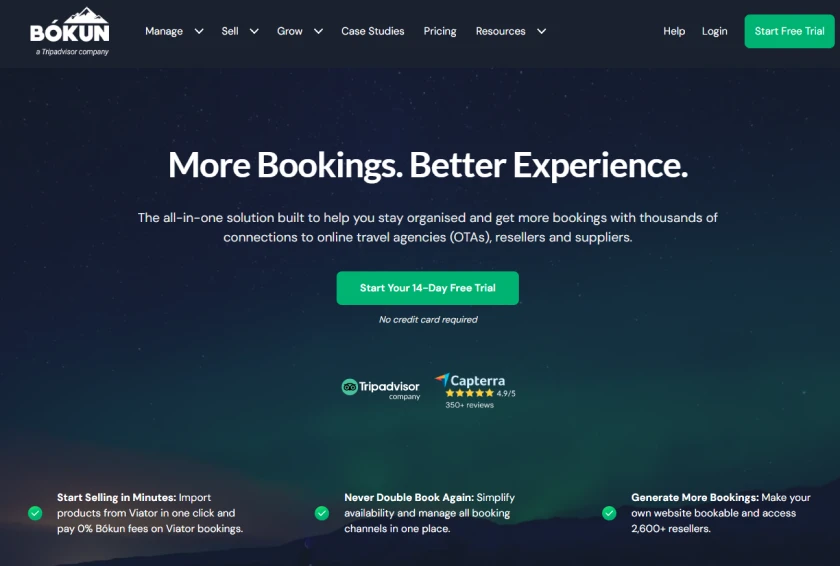
Bokun is owned by Tripadvisor, which tells you something about its reach. The platform started with Iceland’s tour companies and now serves operators globally.
The biggest advantage? Your tours can appear on Viator and TripAdvisor quickly. That’s instant access to millions of travelers already looking for experiences through their tour agency software.
Bókun handles distribution across multiple booking sites while keeping your availability synced everywhere. You won’t accidentally overbook because inventory updates in real-time across all channels.
The B2B marketplace lets you partner with local travel agents who can resell your tours. More people selling your experiences means more bookings.
Bokun’s main features:
One reservation system: See all bookings regardless of where they came from.
Multi-channel selling: List your tours on different platforms with automatic inventory updates across all of them.
Website booking tools: Add booking capability to your site and Facebook page for direct sales.
Secure payments: Built-in credit card processing with analytics to track revenue.
Reseller network: Connect with agents and vendors who can sell your tours on commission through Bókun’s marketplace.
5. Rezdy
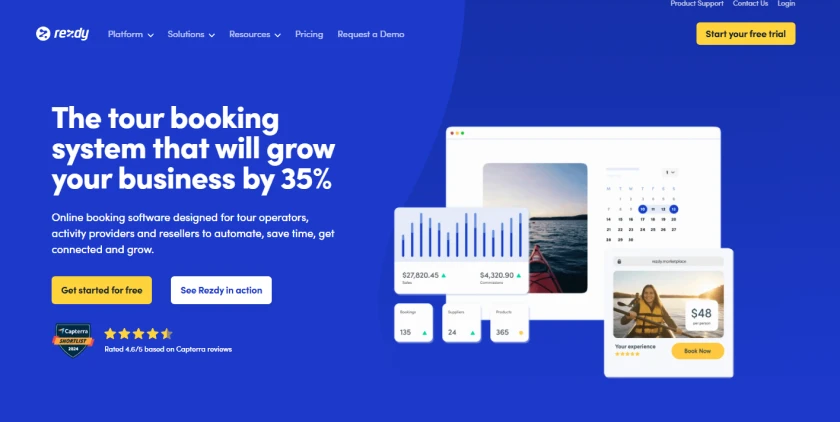
Rezdy focuses on connecting tour operators with travel agents and online travel agencies worldwide. Its marketplace is the main attraction.
You can get your tours listed on multiple booking platforms without doing individual deals with each one. Rezdy handles the connections, you handle the tours.
The booking engine supports different languages and currencies (important for international customers). The channel manager keeps your availability accurate across every platform where your tours appear.
You can set up a portal specifically for agents who want to book on behalf of their clients. Resource management tools help you track guides, vehicles, and equipment.
Pricing works on low monthly fees plus small commissions per booking. Choose a plan based on your booking volume.
Rezdy features:
Multi-language booking widget: Works in various languages and currencies for international appeal.
Global marketplace: Thousands of agents and resellers can discover and book your tours.
OTA integrations: Direct connections to major online travel agencies with live availability.
Resource scheduling: Assign and manage guides, transportation, and gear.
Performance reports: See booking numbers, revenue, and which partners bring in the most business.
6. Tashi
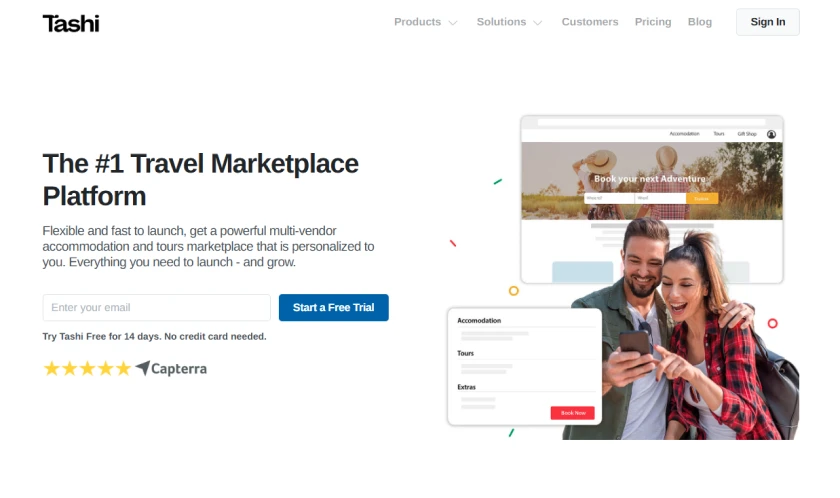
Tashi combines multiple tools into one platform so you’re not juggling different software for different tasks.
The system handles tour inventory, bookings, customer communications, and even builds your website. Everything operates from one login, making it the top tour agency software.
The itinerary builder lets you create branded trip proposals that look professional. Send detailed travel plans to clients that include accommodations, activities, and pricing.
Tashi’s booking engine works for both instant bookings (customer books and pays immediately) and inquiry-based bookings (they request details first). This flexibility helps with different sales approaches.
What Tashi provides:
Complete tour management: Inventory, reservations, customer data, and accommodation details in one system.
Direct booking engine: Take bookings and payments through your website. Works for instant purchases or inquiry workflows.
Built-in website creator: Build a modern, search-engine-friendly site without coding knowledge.
Proposal builder: Create personalized trip plans and price quotes that look polished and professional.
Communication center: All customer emails, messages, and booking updates in one place instead of scattered across different platforms.
Customer tracking: CRM tools that remember guest history and preferences for better service using tour agency software.
7. FareHarbor
FareHarbor is backed by Booking.com and runs on commissions instead of monthly subscriptions. You pay per completed booking.
This model works well if your booking volume varies. During busy seasons, you’ll pay more, but slow periods don’t come with fixed costs.
The reservation system brings together bookings from your website, phone calls, walk-ins, and partner sites. Everything appears in one calendar usingthe tour agency software.
Built-in payment processing means customers can pay with credit cards through FareHarbor’s secure system. The CRM stores customer details and tracks communication history.
Connections to major online travel agencies help you distribute inventory to partners who can resell your tours.
FareHarbor’s features:
Centralized calendar: Manage all reservations from every source in one scheduling system.
Customer management: Stores booking history, contact details, and communication records for each client.
Integrated payments: Accept credit cards through FareHarbor’s payment processor.
Partner distribution: Connect inventory with major OTAs and resellers.
Custom reporting: Generate reports with the specific metrics you care about tracking.
8. TripWorks
TripWorks aims to replace the jumble of different tools many tour operators use. One platform instead of five different programs.
The interface is straightforward. The booking system manages availability, payments, and confirmations without complicated steps using tour agency software.
Marketing features go beyond basic booking management. You can create attractive trip listings that customers want to share. Built-in email automation sends messages to potential customers who haven’t booked yet.
The CRM remembers client preferences and trip history. Use this information to recommend tours they’ll actually want.
TripWorks features:
Unified calendar: One place to see tour departures, availability, and reservations.
Customer relationship tools: Record client information, past trips, and preferences for personalized service.
Marketing automation: Automated emails, abandoned cart recovery, and promotional code creation.
Analytics and reports: Understand booking patterns, revenue trends, and customer demographics.
API access: Enterprise customers can build custom integrations with other software.
9. WeTravel
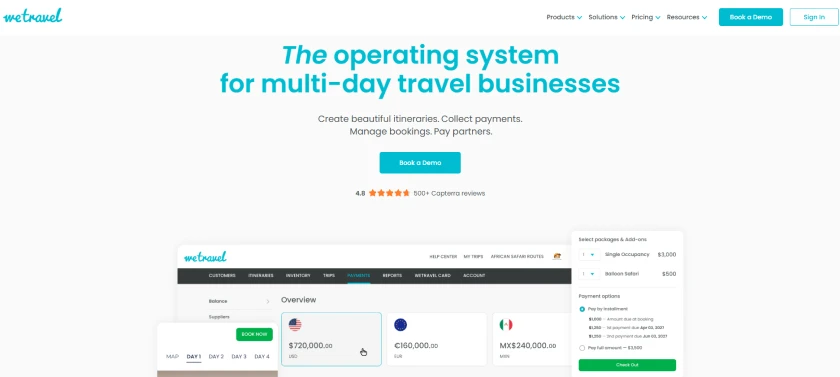
WeTravel specializes in group trips and multi-day tours. It’s built specifically for handling multiple travelers on one booking.
The platform shines at payment collection. You can require a deposit when someone signs up, then collect the rest later. Different payment schedules for different trip types.
Each tour gets its own professional webpage with itinerary, pricing, photos, and booking form. You can work in one currency while customers pay in theirs (the system handles conversion).
The dashboard shows all participant information in one place. Download lists, track payments, and manage logistics without switching between systems using tour agency software.
Team features let multiple staff members manage trips if you’re working with others.
WeTravel’s features:
Professional trip pages: Each tour gets an attractive landing page with booking capability.
Flexible payments: Set up deposits, payment plans, or full payment upfront. Process different payment structures for different tours.
Traveler dashboard: See all participant details, download information, and track who’s paid.
Team collaboration: Multiple people can manage bookings and customer details.
Software connections: Integrates with accounting tools to sync financial data automatically.
10. TrekkSoft
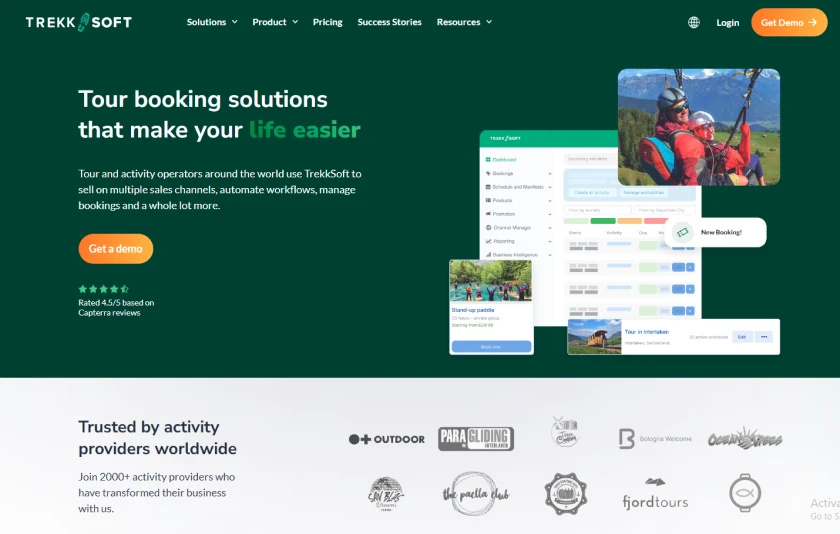
TrekkSoft has been around for years serving tour operators worldwide. The platform started in Switzerland and now works globally.
Multi-channel management is where TrekkSoft excels. You get a booking engine for direct sales, a widget for your website, and an agent portal for partners using tour agency software.
The Agent Desk lets travel agents log in and book your tours on commission. They see availability and can make reservations on behalf of their clients. This expands your reach without direct marketing costs.
Connections to online travel agencies and global distribution systems put your inventory in front of corporate travel bookers and agencies using those networks.
TrekkSoft’s features:
Customizable booking flow: Add booking capability to your website with your branding.
Partner portal: Third-party agents can check availability and make bookings through their own login.
Distribution channels: Connect your tours to OTAs and global distribution systems used by travel agencies.
Operations management: Schedule guides, equipment, and time slots with resource tools.
Marketing tools: Create discount codes, special offers, and promotions to boost bookings.
No Spam. No calls. Unsubscribe anytime.
11. Lemax
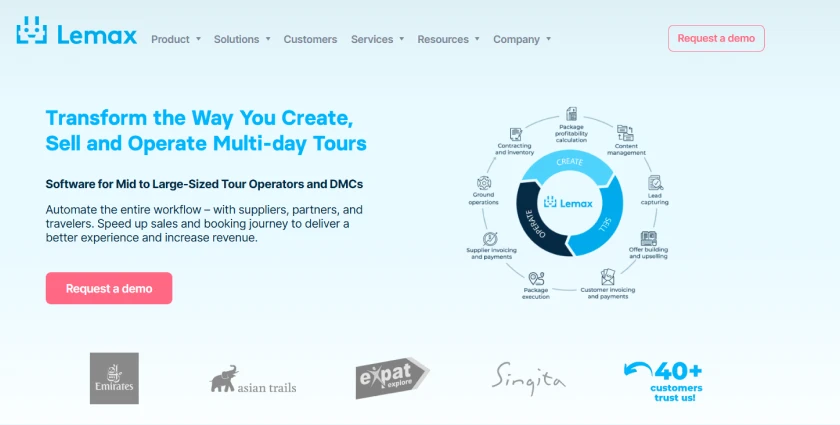
Lemax handles the entire travel business workflow from first inquiry to final payment. It’s built as an all-in-one solution.
The platform automates repetitive tasks so you spend less time on admin work. Create travel packages by combining hotels, tours, transportation, and flights into a single product with set pricing, utilizing tour agency software.
You can build both standardized packages and custom quotes. Generate professional itineraries and proposals quickly instead of starting from scratch each time.
Lemax connects with external systems to add functionality. The finance module handles invoicing, payments, and accounting in the same platform as your bookings.
Users report significant time savings from automation and having customer information in one database instead of being spread across multiple programs.
Lemax features:
Package creation: Build complex trips combining multiple services with bundled pricing.
Automated quotes: Generate professional proposals and itineraries fast.
External integrations: Connect with other systems to extend what the platform can do.
Financial management: Handle invoices, payments, and accounting alongside bookings.
Customer database: Store detailed client information and complete trip history for better service.
How to Choose the Right Tour Agency Software
Picking the right tour agency software means matching features to your actual business needs, not just choosing the most expensive option.
1. Match Software to Your Business Type
Consider what kind of tours you run. Day trips need different features than week-long expeditions. A solo operator doesn’t need the same complexity as a multi-staff agency. Identify your tour type first, then look for software built for that use case.
2. Understand Pricing Models
Tour software typically charges monthly subscriptions, per-booking commissions, or both. Monthly fees give predictable costs but you pay during slow periods.
Commission-based pricing means you only pay when you earn, helping newer or seasonal businesses. Calculate the real cost including transaction fees and payment processing (usually 2-3% per booking).
3. Focus on Essential Features
Every tour business needs booking calendars, payment processing, customer data storage, and availability management.
Beyond basics, identify what improves daily operations: automated emails, dynamic pricing, or multi-language support. Choose software that excels at your daily needs rather than offering everything poorly.
4. Test the Customer Experience
During free trials, complete the booking process as a customer. Is it confusing? Does it work on mobile? A clunky checkout loses sales regardless of backend features.
5. Plan for Growth and Support
Choose software that scales with your business. Check upgrade paths for adding tours, staff, or advanced features. Also verify support quality, when problems happen before busy weekends, you need fast help through chat, phone, or email.
6. Use Free Trials Wisely
Most platforms offer 14-30 day trials. Set up tours, process test bookings, and try daily features. If something feels complicated during trials, it won’t improve after paying.
The best tour agency software works reliably without getting in your way, letting you focus on running great tours instead of fighting technology.
Final Thoughts
The right tour agency software depends on what you actually need. New agencies might prefer Peek Pro’s pay-per-booking model. WordPress users should look at WP Travel Engine. If you want Tripadvisor connections, Bokun makes sense.
Most platforms offer free trials. Test a few before committing. Pay attention to which interface feels natural and which features you’ll actually use (not just which sound impressive).
The best tour agency software is the one you’ll use consistently. Pick something that fits your workflow instead of forcing yourself to adapt to overcomplicated systems.
