
Investing in an Automated sales CRM software is always beneficial for every type of business. Such tools are required because teams don’t want to spend most of the time doing manual and routine work.
Be it generating leads, feeding them personalized content, interacting with the customers at the starting level, sending emails for follow-ups and more.
You can’t create a brand without automation, or be ready to lose a lot of capital in hiring more employees as you scale up.
What is Automated Sales CRM software?
Automated Sales CRM software is the use of AI and tech, to create a system that runs itself. The latest software are so powerful that they don’t require manual intervention at all.
These tools change the strategy by themselves. So unlike before, where the workflows were unidirectional, now they are flexible.
This makes you stay ahead among the competitors. Content is generated automatically, fed to customers using AI, the chatbots talk in a progressive manner, data is stored, customer profiles are segmented, and the products are shown with creativity.
Let’s check out the best tools that can help you achieve the RESULTS.
The Top 7 Automated Sales CRM software in 2026 are:
1. Centripe
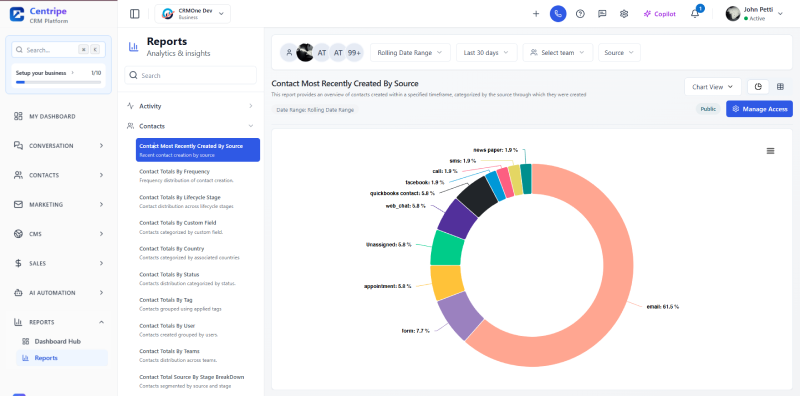
Centripe has a smooth user interface that’s perfect for small business and start ups. New teams can easily adapt to the automation features; there is no need to be an expert at it.
The advanced AI handles customers enquiry, giving a natural human like response. Every page visitor is interacted with. It supports multiple languages, so no leads are missed.
It has the capability to reach leads through email, SMS, social media and phone calls. It tracks every campaign performance, such as open rates, click-through rates and conversion metrics.
Smart algorithms find the prospects that are most likely to convert. Workflows adjust on their own to increase conversions.
The quote management is done efficiently. For every customers, a quotation is created within the system automatically in a personalized way, which increases the chance of closing the deals.
Features:
- Advanced AI understands context and intent.
- Supports website, Messenger, and WhatsApp channels.
- Spot high-value leads for the sales team.
- Book appointments automatically.
- Ensures GDPR and SOC 2 security.
Pros
- Handles complex questions effectively.
- Increases customer satisfaction notably.
- Enables instant FAQ responses
Cons
- Analytics details are lacking.
- No pricing transparency.
- FAQs incomplete.
Pricing:
$299/ month / unlimited users
2. ActiveCampaign
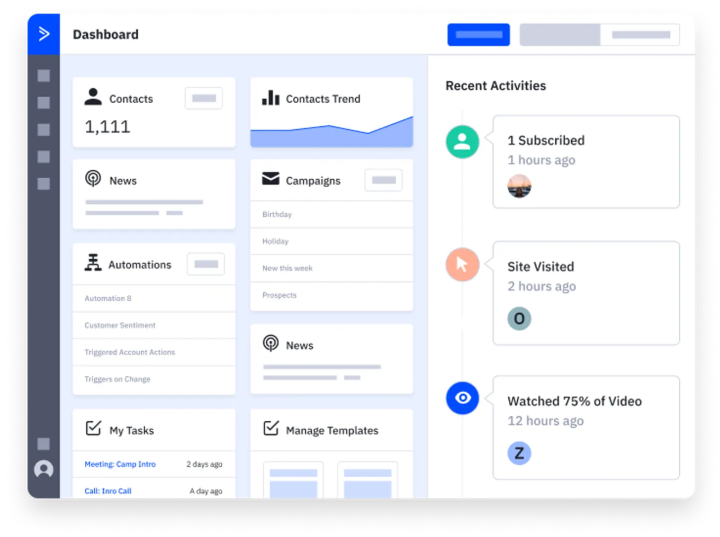
ActiveCampaign isn’t just an email tool; in fact, it has many features for CRM automation. The connectivity of all features is marvellous. They are aligned for the leads to move up in the pipeline.
It puts on triggering points and does repetitive sales tasks. It scores contacts when events happen.
It offers extensive reporting, which helps you understand easily what’s going on your favour and what’s not. Improvisation is done automatically, too.
Write plain English, and it will turn that into workflows. The issues arise when the brands want to scale up, because the cost is way higher.
Features:
- Builds complex personalized email flows.
- Enables WhatsApp conversation automation.
- Delivers fast personalized SMS campaigns.
- Connects 1,000+ apps seamlessly.
- Provides AI marketing busywork reduction.
Pros
- Simplifies marketing automation greatly.
- Boosts engagement effectively.
- Generates revenue through forms.
Cons
- Overwhelms beginners initially.
- Requires external help sometimes.
- Pricing is enterprise-level only.
Pricing:
$145/month/ 5 users
3. HubSpot
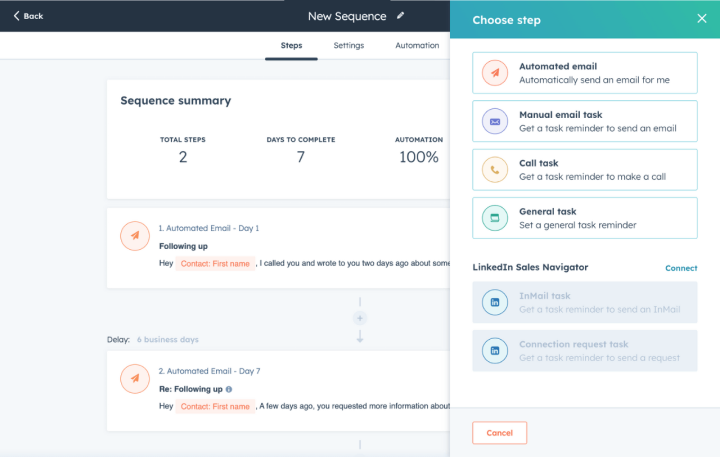
HubSpot has everything a business wants. For sales purpose, this automated sales CRM software scales personalizing sequences with AI powered timing and content.
It focuses on customer experience, which makes its automation a very useful tool. It has in-built workflows that can be used to rotate leads and create deals.
The sales teams are updated with all the information, and they know when to follow up with the customers, who are on the verge of buying.
It automatically runs A/B testing and maximizes your outreach strategy. It integrates with Gmail, Google Workspace, Outlook, and office365 for Windows.
Features :
- Manages visual sales pipelines.
- Tracks email opens and clicks.
- Schedules meetings effortlessly.
- Builds knowledge base portals.
- Scans business cards quickly.
Pros
- Centralizes all customer data.
- Automates repetitive sales tasks.
- Enhances team collaboration smoothly.
Cons
- Steep learning curve.
- Limited free plan features.
- Complex customization needed.
Pricing:
$3600/ month / 5 users
4. Zoho
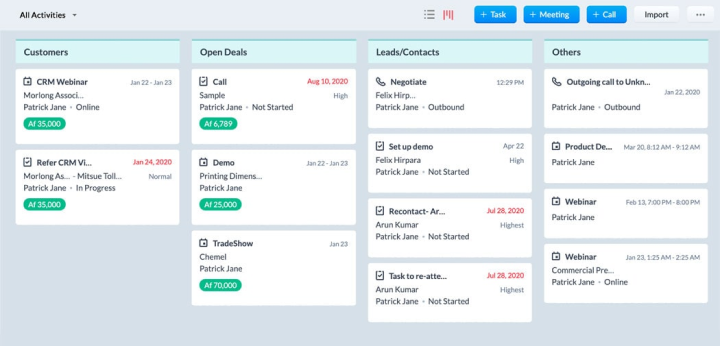
This AI driven CRM aligns the repetitive tasks, eliminating the manual data handling for faster lead conversion.
It removes any reporting efforts, reduces response times and gives quality lead lists. The data consistency is maintained across the system automatically.
It automates scheduling, emails and basic question handling. It integrates multiple tools so that teams don’t have to switch between multiple screens.
Zoho Cliq helps sales teams get in touch with anyone in the organization and answer questions without any issues. It even sends proposals or contracts to your leads.
Features:
- Scores lead using AI predictions.
- Creates custom sales blueprints.
- Manages global territories efficiently.
- Merges duplicate contacts automatically.
- Integrates social media channels.
Pros
- Unifies multichannel engagement.
- Delivers real-time team notifications.
- Generates predictive sales insights.
Cons
- Cluttered interface design.
- Slow mobile performance.
- Rigid reporting limits.
Pricing:
$200 / month / 5 users
5. GoHighlevel
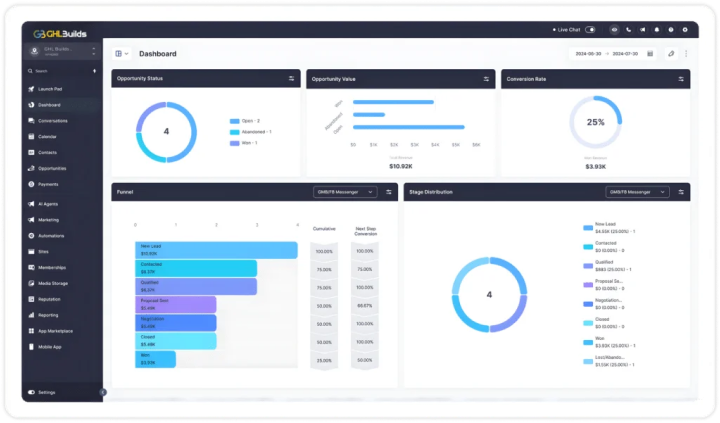
GoHighLevel, as an automated sales crm software, lets you build a powerful custom pipeline. Divide the leads into various segments like new or hot leads.
Appointments are booked, and follow-ups are done. Leads are captured from forms, Facebook Ads, and other platforms.
Based on the status, the pipelines are updated, and invoices are sent. It has an intelligent dashboard that lets the team get information such as the value of leads, stage distribution, and funnel performance.
Features:
- Builds unlimited sales funnels.
- Manages reputation requests automatically.
- Creates membership sites easily.
- Schedules social media posts.
- Processes payments via Text2Pay.
Pros
- Enables white-label reselling.
- Supports unlimited subaccounts.
- Offers snapshot replication.
Cons
- Overwhelming feature overload.
- Steep monthly pricing.
- Buggy mobile experience.
Pricing:
$297/ month
6. Pipedrive
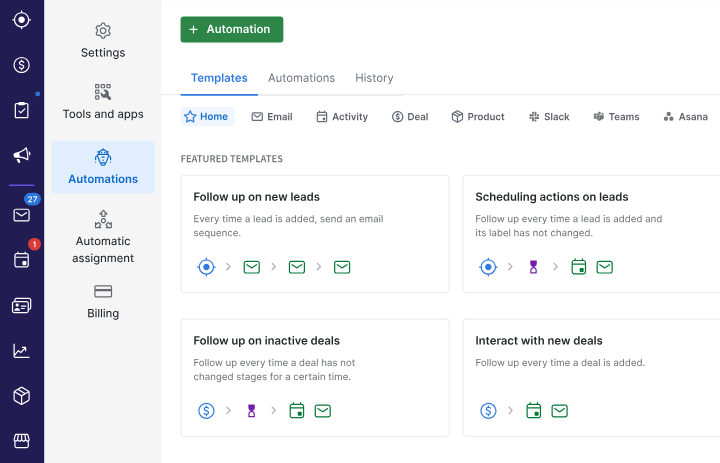
It deploys an intelligent sales assistant that analyzes sales pipelines and predicts the win probabilities. The tool identifies high potential deal for prioritization and flags stalled progress.
It has a powerful AI email tool that generates personalized messages from simple prompts and increases response rates.
Based on the stages, it does next steps like follow-ups, scheduling, providing deal summaries and store the data in the system for future strategies.
Features:
- Visualizes sales pipeline dynamically.
- Automates follow-up email workflows.
- Forecasts revenue accurately.
- Integrates email and calendar.
- Generates custom sales reports.
Pros
- Focuses on sales activity-based.
- Simplifies deal tracking visually.
- Prioritizes high-potential leads.
Cons
- Limited marketing automation.
- Basic contact segmentation.
- Higher cost for add-ons.
Pricing:
$400/ month / 4 users
7. Salesforce
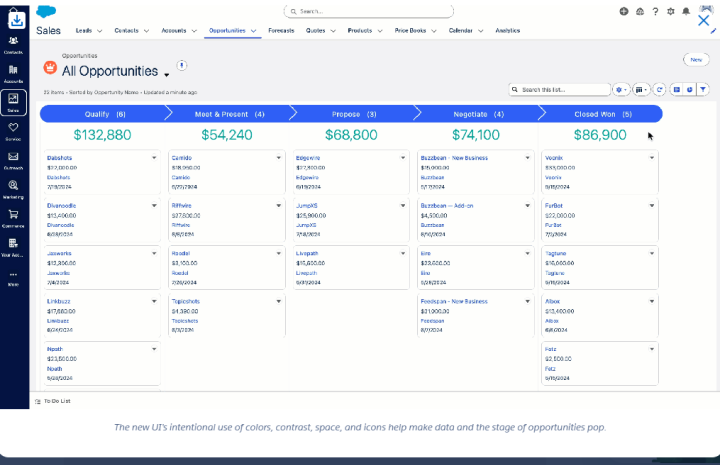
Salesforce uses AI to help businesses sell better. It can predict which customers are most likely to buy and tells sales teams what to do next.
The system creates personalized emails and messages in many languages automatically. AI chatbots answer customer questions day and night without needing human help.
It sends emails and reminders based on what customers do. The platform helps businesses reach the right people with marketing campaigns. This way, they can make more money.
Salesforce’s AI can take action on its own, like warning about customers who might leave. However, it costs more money and needs trained people to set it up properly.
Features:
- Deploys AI-powered Einstein insights.
- Customizes apps via low-code tools.
- Orchestrates omnichannel campaigns.
- Manages field service operations.
- Secures data with advanced encryption.
Pros
- Scales enterprise-wide seamlessly.
- Accelerates workflows intelligently.
- Unifies customer experiences fully.
Cons
- High implementation complexity.
- Expensive licensing model.
- Demands technical expertise.
Pricing:
$330/ month / 1 user
No Spam. No calls. Unsubscribe anytime.
Conclusion
Choose an automated sales CRM software that connects all the processes. Before sales, marketing and lead generating should be aligned, and after sales, customer experience should be the focused thing.
Doing everything manually would require a lot of human resources; automation is the key here.
Discuss with your team, take DEMO of different software and find out which fits perfectly into your already existing system and the kind of business you have.
There are numerous benefits of such tools, like an increase in ROI, a great customer experience, forming a brand, and loyalty.
