
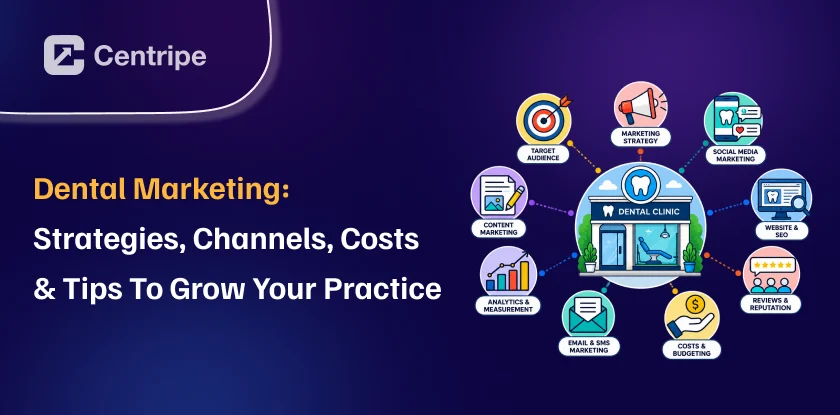
Dental marketing is about attracting new patients, retaining existing ones, and staying consistent. It’s about creating an impact, so patients choose your clinic over other competitors. It also helps build relationships with patients before, during, and after their visit.
Both online and offline marketing can be used for this purpose. Effective marketing is about being visible and building trust, not just promoting your clinic.
This article will cover the different types of dental marketing, strategies, channels, costs, and ways to measure results.
What Is Dental Marketing?
Dental marketing is the promotion of your dental practice using different methods that suit your audience the most.
It encourages patients to choose your services and helps them understand why your clinic is the right choice for their needs. The goal of marketing is not just about getting new patients but also creating a positive experience that encourages existing patients to return.
Dental marketing should be consistent, patient-focused, and aligned with the practice’s goals.
Why Is Dental Marketing Important for Dental Practices?
83% of Americans use online reviews to evaluate a dentist, and 80% use reviews as the first step when choosing a new dentist.
That’s how important the online presence has become. Because searching online beforehand is easier, anyone from the comfort of their home can do it.
Because reviews are dependent on the patient experience, marketing includes showing your patient’s journey, so it builds trust and the reviews are good.
Dental marketing helps you be visible and create awareness among people who are searching for dental services.
It helps practices stay connected with existing patients, supports steady patient growth, and gives an opportunity for long-term practice revenue. You can also check reports to analyze your efforts.
What Are the Main Types of Dental Marketing?
Digital Dental Marketing:
This is about having an online presence, so anyone who searches on Google about dental treatment, or looks for it on social media, your clinic’s name pops up. So, you reach potential patients through online platforms and digital channels.
Traditional Dental Marketing:
Using offline methods such as print ads, flyers, brochures, and direct mail to reach your target audience. It is still an effective way because it connects directly.
Local Dental Marketing:
Use Local SEO to help your practice reach people searching for dental services in your area. This is highly recommended because the patients are in the same locality and there are high chances of them booking an appointment.
Referral Marketing:
Referral is very important because it helps in building trust among people. I don’t call it marketing though; I call it an art. When you give a great experience to patients, they tell others about your clinic, and it helps in building professional networks too.
Content Marketing:
Share useful information that answers patient questions. When they ask questions on the internet, and if your content satisfies their queries, then they remember you. And in the future, if they need treatment, they are more likely to contact your clinic.
Paid Dental Advertising:
It’s an inorganic but effective way to reach the audience. Use paid ads and promote dental services on different marketing channels. But always check the ROI every week so you know which strategy is working and which is not.
Patient Retention Marketing:
Stay connected with existing patients after their appointments, so they remember your clinic when they need dental care again. It also helps you build long-term relationships with patients. A dental CRM can help you keep patient information and communication organized in one place.
Community Marketing:
Building awareness and relationships through local events, partnerships, and community involvement.
What Are the Most Effective Dental Marketing Strategies?
Strategies are different for different purposes. First, discuss with your team and implement one at a time, and then do all together. These dental marketing ideas can help you build visibility and connect with more patients.
Build a Strong Online Presence:
A strong online presence starts with building the website first, because that’s the medium through which patients come to it and then book an appointment to visit in person. So give a clear button for booking an appointment on your website. Dental scheduling software can make it easier for patients to book appointments online.
Create a Google Business Profile, social media presence, give clear contact details, services you provide, what is the location of your clinic, and other details.
Focus on Local Visibility:
Local SEO is beneficial to everyone. It increases your visibility, so people who are searching for related queries reach your page. Provide Google Maps, use local keywords, and make the clinic easy to find for nearby patients.
Make Patient Experience Part of Your Marketing:
It all comes down to the patient experience. These patients can become one of your strongest marketing channels. When you communicate with them, make sure it’s personalized. Understand their problems and provide relevant solutions.
Follow up at the right time, and train your staff to interact in a polite way. A good patient experience supports marketing in numerous ways by spreading positive word of mouth and increasing online reviews.
Build a Strong Review Reputation:
As I wrote in the previous section, patient experience is the source of building a strong review.
When a patient is satisfied, ask them for genuine reviews. Ask your team to respond to the feedback and use reviews to build credibility.
It might happen that a patient posts a negative review; respond to it too, but in a smart way.
Use Educational Content to Answer Patient Questions:
Cover common treatment questions; research what patients are looking for and what their dental concerns are. Are they looking for procedures, or are they curious about the cost, or do they want to know how long a dental cleaning takes?
These queries are your source of reaching out to them and providing simple educational content that the patients find relevant and get their answers.
Make Referrals a Natural Part of Growth:
When patients have a good experience, they may recommend your clinic to their friends, family, or colleagues. Make it easy for satisfied patients to refer others and build professional relationships that can bring relevant referrals to your practice.
Stay Connected With Existing Patients:
When the patient’s treatment has been done, don’t forget about them. Send them next appointment reminders, follow-ups, and suggestions for other treatments that may be beneficial to them.
Communicate with them and keep them connected with the practice.
Track What Brings Patients to Your Clinic:
Know which medium is bringing more patients to your clinic. Check on leads and their sources. Are they booking through the website or social media? Track the conversion rates, patient acquisition cost, and ROI. Dental practice management software can also help practices keep patient and appointment data organized.
Which Dental Marketing Channels Should You Use?
| Marketing Channel | How It Helps |
|---|---|
| Google Business Profile & Maps | Local visibility, reviews, location, and contact information |
| Dental Website | Explaining services and turning visitors into appointments |
| Social Media | Social media marketing for dentists can help build familiarity and show the human side of the practice. |
| Email & Patient Communication | Staying connected with existing and potential patients |
| Paid Search & Social Ads | Reaching targeted audiences and generating quicker visibility |
| Offline & Community Channels | Building awareness and relationships within the local community |
How Much Does Dental Marketing Cost?
There Is No Fixed Dental Marketing Cost:
One thing about marketing is that you have ample opportunities, but it comes at a cost, and some cost more than others. But the budget to be spent on marketing depends on the clinic’s size, location, competition, current patient base, and future goals.
Set a Budget Based on Practice Revenue:
Established dental practices may commonly allocate around 3-9% of revenue towards dental marketing.
If your practice is new, and is focused on faster growth, then you need to invest more. You have to do both online and offline marketing to establish your clinic.
New vs. Established Dental Practices:
For a new clinic, people are unaware of their services; they have to build trust, so you spend more to build awareness. Established clinics already have a patient base; they have referrals and returning patients. So they may need to spend less.
Location and Competition Affect Costs:
If there are more dental clinics in your area, then there is higher competition for the same patients. That’s where the marketing costs can go high. You have to build your place in the market, while the others are also doing the same.
Note: In such scenarios, use marketing as a tool to offer what your competitors are unable to offer. Find what they are lacking and use that as your marketing message.
Different Channels Have Different Costs:
Each channel costs differently. Paid ads can require a higher ongoing budget, while SEO needs a team, so you have to account for team or agency costs. And for email marketing, if you are using a third-party integration, you have to take subscriptions.
Track Patient Acquisition Cost and ROI:
Don’t only look at how much you spend on marketing. Check how many new patients you get from that spending and what each new patient costs you to acquire. This helps you understand whether your marketing budget is actually bringing results.
How Should You Measure Dental Marketing Results?
Leads
Track how many people reach out to your clinic from your marketing. This shows if your efforts attract potential patients.
Appointments
Count how many leads book an appointment. This indicates if your marketing brings in genuinely interested people.
Conversion Rate
Measure how many leads become appointments or patients. A higher conversion rate means your marketing targets the right audience.
Patient Acquisition Cost
Calculate how much you spend to acquire one new patient. This helps you see if your marketing costs are justified by the results.
ROI
Compare the revenue from new patients with your marketing costs. This shows if your dental marketing is financially worthwhile.
Conclusion
Dental marketing goes beyond attracting more patients. It’s about helping people find your practice. It’s about building trust. It’s about ensuring a great experience. It’s also about keeping in touch.
There isn’t a one-size-fits-all marketing plan for dental practices. Start with the channels your patients prefer. Check the results and see what draws people to your clinic. Continue what works and stop what doesn’t.
Frequently Asked Questions