
Your customer just abandoned their cart. Again. Was it the shipping cost? A distraction? Or did they simply forget you exist among the 47 other tabs open on their browser?
In Ecommerce, your business is surrounded by competitors, who are ready to show their products to prospects. Hence, you need an e-commerce CRM that gives a great customer experience and works smoothly with your ecommerce management software.
This software tracks every click, predicts what the customer wants, and automates the follow-up precisely through proper ecommerce CRM integration.
The difference between a one time buyer and a lifetime customer isn’t just being lucky. It’s about using the E-commerce CRM to turn data into revenue while keeping all business management systems connected.
After reading this guide, you will learn how e-commerce CRM works, how it benefits your business, and how the best tools like Centripe, HubSpot, and Gohighlevel can help you scale up.
What is Ecommerce CRM?
Ecommerce CRM is a system that helps online stores manage customers, orders, and communication in one place.
It remembers who your customers are, what they viewed, what they bought, and how they interact with your store. Instead of treating every shopper the same, an e-commerce CRM helps you send the right message at the right time.
For example, cart reminders, order updates, offers, and support replies are all handled automatically. In simple words, ecommerce CRM helps you sell more without doing extra manual work.
It turns random visitors into repeat buyers by giving them a smoother, more personal shopping experience.
Why your business needs E-commerce CRM?
You don’t start an online store to manually track spreadsheets, right? Keeping an eye out for customers who are worth reaching out to.
An e-commerce management software personalizes marketing and automates follow-ups across the entire customer journey.
It increases revenue, retention, and team efficiency.
With E-commerce CRM, there is a 29% increase in sales and up to 245% higher revenue.
Because every lead is tracked in the pipeline, fed with personalized content, and given instant replies with AI chatbots.
These business management system gives a full view of each shopper, such as orders, behavior, support history, and more.
Companies using CRM report 43–47% better customer retention and satisfaction because communication stays consistent and relevant across email, SMS, and support.
E-commerce CRMs track browsing, carts, and purchases so you can send highly targeted campaigns (abandoned cart, replenishment, cross‑sell) instead of generic ones.
Features of Ecommerce CRM: Solution of your pain points
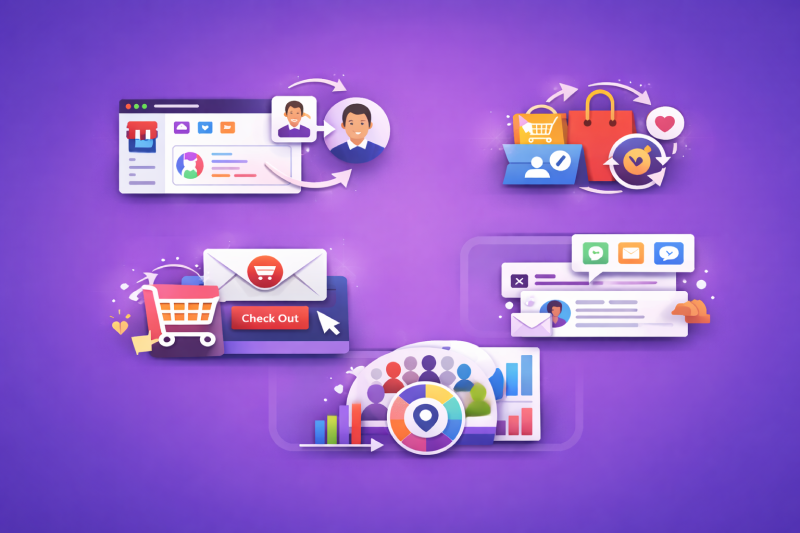
1. Scattered Customer Data : Unified Customer Profile
Admit it! We don’t like customer data all spread all over the place. It’s just everywhere, in your store, email campaigns, ad platforms, WhatsApp chats, and support tickets.
An e-commerce CRM pulls all data into one unified dashboard. Now, you can easily view all customers in one place.
This means improved personalization, smarter decisions, and keeping track of every interaction.
2. Low Repeat Purchases : Lifecycle & Retention Automation
The main cause of dipping revenue is business not getting repeated purchases. The value of one customer isn’t defined by what he/she buys once, but for how much time they are attached with the brand.
CRM in e-commerce for small businesses is why that’s so important. Because it creates automated workflows for post purchase and loyalty triggers, similar to retention strategies used in marketing agency CRM tools.
This gives higher repeat order rates, increased lifetime value, and one time buyers are converted into loyal customers.
3. Manual Follow-ups : Revenue Automation
Start by implementing AI for routine work.
Let’s say a customer has an abandoned cart, and they just left. What do you do now? Wait for them to come back?
Well, what if an automated follow-up email is sent with customized offers that resonates with the customer? They definitely come back and click on ‘Check out now.’
CRM automation helps with abandoned cart recovery, upsell campaigns, and behavior-based messaging.
It does cross-selling so smoothly that customers feel like buying the related product.
4. Chaotic Customer Support : Omnichannel Support Inbox
I have always shifted from brands that didn’t give me timely support, and most of the customers have left out too because of this reason.
The excuses won’t solve the problem. When support requests come in from various sources, things get messy fast.
A CRM ecommerce brings those requests in one box. It includes ticketing, assigns conversations, and provides a complete customer context.
Team responds faster, customers stay happier, and support workload drops.
5. No Customer Insights : Smart Segmentation & Analytics
Making marketing decisions based on gut feeling is expensive guesswork.
E-commerce CRMs provide clear segmentation by looking at recency, frequency, monetary value, behaviour, and spending habits. They also feature real-time analytics dashboards.
You can run focused campaigns that convert, track buying patterns, and make decisions based on data.
How does your business benefit from E-commerce CRM?
1. Smart Price Changes
Not just ecommerce, but even the marketing agency CRM loves this. These tools can change prices automatically throughout the day.
They look at what competitors charge and how many people want to buy something right now.
Smart pricing helps stores make 15-25% profit. Prices stay fair for customers while the business earns more money.
2. Predicting What Will Sell
Smart computers study past sales to guess what customers will buy in the future. This helps stores know exactly how much product to order.
Stores waste 20-30% less money on products that don’t sell. They also know how much to spend on advertising because they know what will be popular.
3. Managing Multiple Stores Easily
Computer systems link all selling platforms, such as websites and social media, in one location. Orders and messages update automatically everywhere at once.
This saves workers from typing the same information many times. Products ship 40% faster because everything is organized and automatic.
4. Finding the Right Customers
Smart programs group customers based on what they like and how they shop. Each group gets special messages and deals that match their interests.
The targeting increases sales by 25% because the offers feel personal to customers.
5. Keeping Customers Coming Back
Computer systems track which customers might stop shopping at a store. They notice warning signs like someone not visiting the website for a while.
The system automatically sends special deals to win back these customers. This helps many more people return to shop again instead of leaving forever.
How to choose the right Ecommerce CRM?
Platform Integrations
Make sure it works with ecommerce platforms like Shopify and WooCommerce, as well as payment gateways. This will allow real-time data sync and eliminate the need for manual exports.
Scalability for Growth
Check that the CRM can manage more transactions, user seats, and data smoothly. Make sure there are no slowdowns or sudden price increases as your business grows.
User-Friendly Interface
Select easy-to-use dashboards that let you customise with drag-and-drop. Use mobile apps to cut down training time and increase team adoption.
Advanced Customization Options
Seek flexible workflows, custom fields, and API access. These features let you customise the system for specific tasks. For example, you can use them for multi-channel lead scoring or inventory alerts.
Analytics and Reporting
Focus on built-in AI insights, custom dashboards, and exportable reports. These tools help track KPIs such as customer lifetime value and abandonment rates.
Cost-Effectiveness and ROI
Compare total costs, including setup, training, and support, with features. Trial periods show quick wins, like time saved through automation.
The 5 Best E-commerce CRM Software are:
1. Centripe
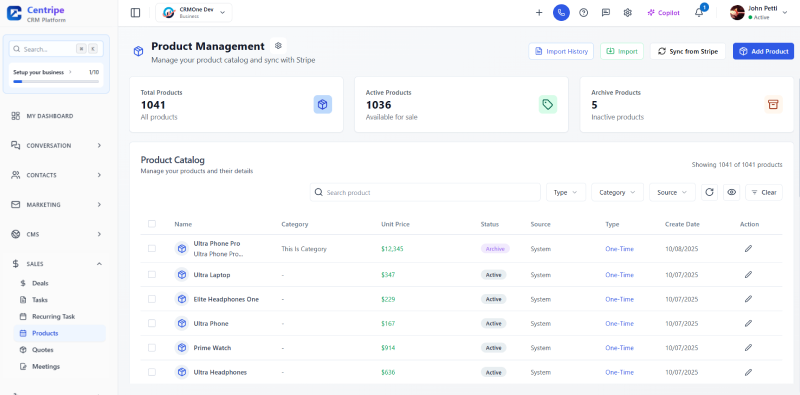
When I discuss business with owners/managers, one thing that we all have in common is the use of AI.
Centripe uses Smart AI tech to do tasks automatically.
For ecommerce business, it has made the whole process so simple by simply adding elements that were missing in other e-commerce crm.
You can add products easily, the prices can be changed, offers are shown to the customers, and the UI/UX is alluring.
It even finds the right customers for your product. You don’t need an extra employee to do that task. Just on repeat automation, and you get qualified leads everytime.
So, what happens when the customers stop buying from you? It sends special offers to win them back.
Centripe is the best e-commerce software for small businesses because of easy adaptability, less training time, no coding, just simple clicks and the job is done. It provides you with lots of opportunities for scaling up at the same pricing of $299/month.
2. HubSpot CRM
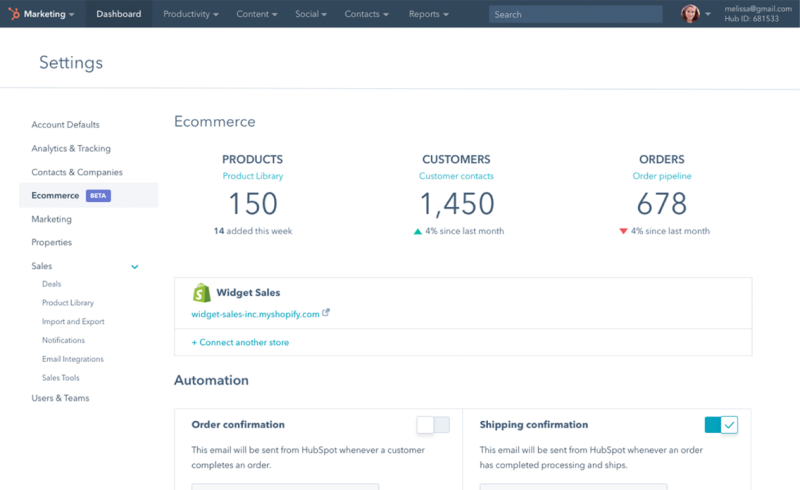
HubSpot gives you free basic tools for email and sales tracking. It works smoothly with Shopify to watch orders and remind customers about forgotten carts.
The reports show you how much each customer spends over time. You can set up automatic messages to reach customers in different ways.
It grows with your business and lets you test different campaign versions. The fancy smart tools cost extra money though.
It’s easy to learn with good help support and phone apps. It helps businesses make 20% more money by sending personal messages.
3. GoHighLevel
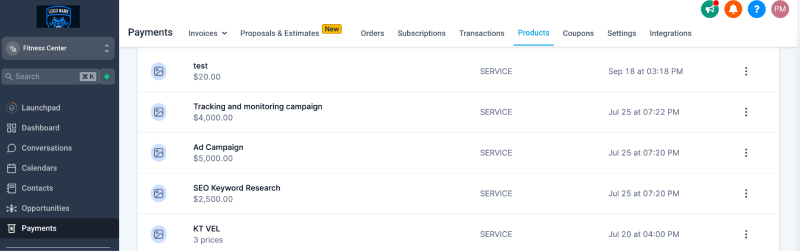
GoHighLevel is an all-in-one tool that agencies can rebrand as their own. It builds sales funnels and sends emails and texts automatically.
GHL is highly preferred as a travel agency CRM due to its dedicated features for that sector.
It has ready-made templates to set up new clients super fast. The chatbots use smart technology to talk to customers.
You can share the money you earn with your team. It connects easily with Stripe for payments and Zapier for other apps.
You can have unlimited customers and separate accounts for each client. Custom dashboards show you how much money you’re making clearly.
4. Klaviyo
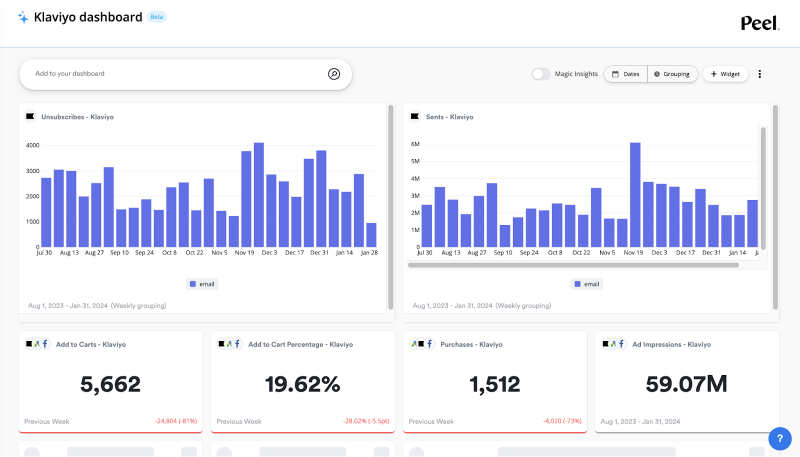
Klaviyo is the expert in email and text marketing for online stores. It uses smart technology to send automatic messages like special offers after purchases.
It groups customers based on what they do on your website. This gets 35% more people to open your emails.
It tracks exactly how much money each campaign makes. You can test different versions and predict how much customers will spend in the future.
It’s not a complete business tool, but it works with other apps. It’s perfect for companies that focus on talking to customers.
5. Salesforce Commerce Cloud
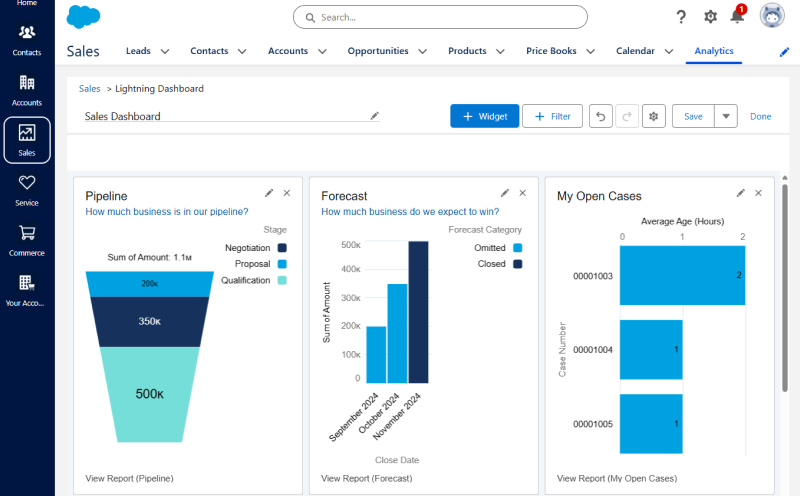
Salesforce is a powerful tool for big businesses. Its smart helper called Einstein gives personal recommendations and predicts sales.
You can customize it to fit how your agency works. It handles huge amounts of orders and keeps track of inventory in real-time.
It’s very secure and connects with lots of other systems. But it costs a lot of money and takes experts to set up.
No Spam. No calls. Unsubscribe anytime.
Conclusion:
Businesses definitely gain an advantage by using CRM for e-commerce. The internal teams are happy because of smooth communication and work being automated; they don’t have to worry about errors.
From lead acquiring to content feeding to taking care of customers after sales is part of the automation process.
E-commerce has become a very competitive market. You cannot rely on older methods. There is no time to try and check.
Using software isn’t optional anymore. Creating your customer base is easy when you use tools that help you develop a proper system.
