Every day, our inbox is flooded. Discounts. Newsletters. “Last chance” offers.
Most of them… we delete without even opening.
But once in a while, there’s that one email that actually makes you stop, read, maybe even click “buy.”
That’s the power of good email marketing strategy.
Now here’s the problem: sending random emails won’t get you there. You need the right email marketing platform that helps you send smarter emails, automate campaigns, segment your audience, and track results.
The market is full of platforms that promise the world. But which ones are actually worth it?
That’s why we have made this list of the best email marketing platforms , comparing their features, pricing, strengths, and limitations.
Quick Answer: Top 7 Email Marketing Platforms for 2026
- Centripe.ai – Built for modern teams that want collaborative campaign management and smarter automation, making it a strong choice for scaling businesses.
- Klaviyo – Perfect for e-commerce brands generating $1M+ in annual revenue.
- ActiveCampaign – Best suited for sales-driven organizations needing seamless CRM integration.
- CRMOne- Designed for organizations that want a unified CRM + email marketing solution, giving sales and marketing teams one platform to nurture leads and drive conversions.
- HubSpot Marketing Hub – Ideal for B2B companies with 50+ employees looking for fully integrated marketing operations.
- Brevo – The most cost-effective choice for growing businesses on a budget.
- Mailchimp – A great starting point for marketing beginners and small businesses.
Email Marketing Platforms Comparison
| Platform | Best For | Starting Price | Free Plan | Key Strength | Main Limitation |
|---|---|---|---|---|---|
| Centripe | All-in-One Marketing & CRM | $99/mo | Yes (14 day trial ) | Email, CRM, Automation, Helpdesk | Feature-rich → takes time to explore |
| Klaviyo | E-commerce | $20/mo | Up to 25- contacts | Revenue analytics | E-commerce only |
| Active Campaign | Sales team | $15/mo | 14-day trial | Sales automation | Complex interface |
| CRMOne | Unified CRM + Email Marketing | $18/mo | 14-day trial | Combines CRM + email in one platform, saves time | Fewer templates compared to older tools |
| Hubspot | B2B Integartion | $800/mo | Yes (limites) | Native CRM | Expensive Scaling |
| Brevo | Budget conscious | $25/mo | 300 emails day | Multi-channe | Limited integration |
| Mailchimp | Beginner | $13/mo | Up to 500 contacts | User-friendly | Expensive growth |
Top Email Marketing Platforms
1. Centripe
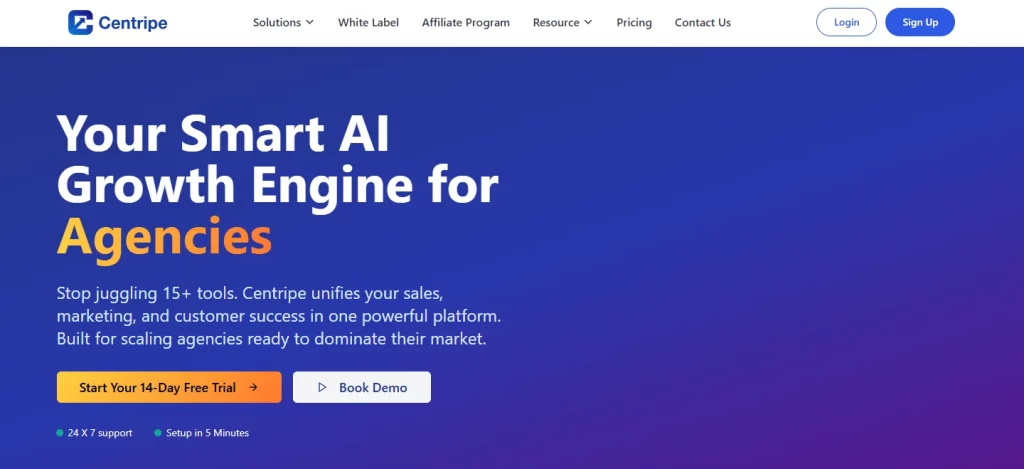
Ideal for: Agencies, startups, and growing businesses that want email, marketing automation, and CRM under one roof.
Centripe is not just an email marketing tool, it’s a complete platform designed to help businesses capture leads, nurture them, and turn them into loyal customers.
It supports email campaigns, automation, segmentation, and personalization, making it suitable for businesses that need more than basic email sending.
Unlike most tools that only focus on emails, Centripe gives you everything in one place: CRM, automation, landing pages, sales pipelines, and even customer support features.
Key Email Marketing Features:
- True All-in-One Platform: Manage emails, SMS, social media, CRM, landing pages, and even customer support from a single dashboard. No switching tools, no extra costs.
- Smart AI Features: Centripe.ai’s AI helps you write better subject lines, predict customer behavior, and even suggest the best time to send campaigns.
- White-Label Option: Agencies can rebrand Centripe.ai and sell it as their own software, a rare feature in most email platforms.
- Deep Personalization: Go beyond just “Hi {Name}.” Centripe.ai uses customer data (past purchases, browsing habits, even service history) to send highly relevant messages.
- Seamless CRM Integration: Your sales and marketing departments observe the same data between initial email and ultimate purchase so no prospect is lost.
- Multi-Channel Engagement: Multi-Channel Engagement: email + SMS + WhatsApp + social scheduling, in one place.
- Built-In Helpdesk: Unlike other tools, it also has a support system where businesses can manage tickets and chat with customers directly.
Limitations:
- Since it offers so many features, beginners may need a little time to explore everything.
- Some advanced AI features are available only in higher plans.
Pricing Structure:
Flexible and affordable, designed for small to mid-size businesses.
Essential: $99 per month
Unlimited: $299 per month
2. HubSpot Marketing Hub: Best for Integrated Marketing Operations
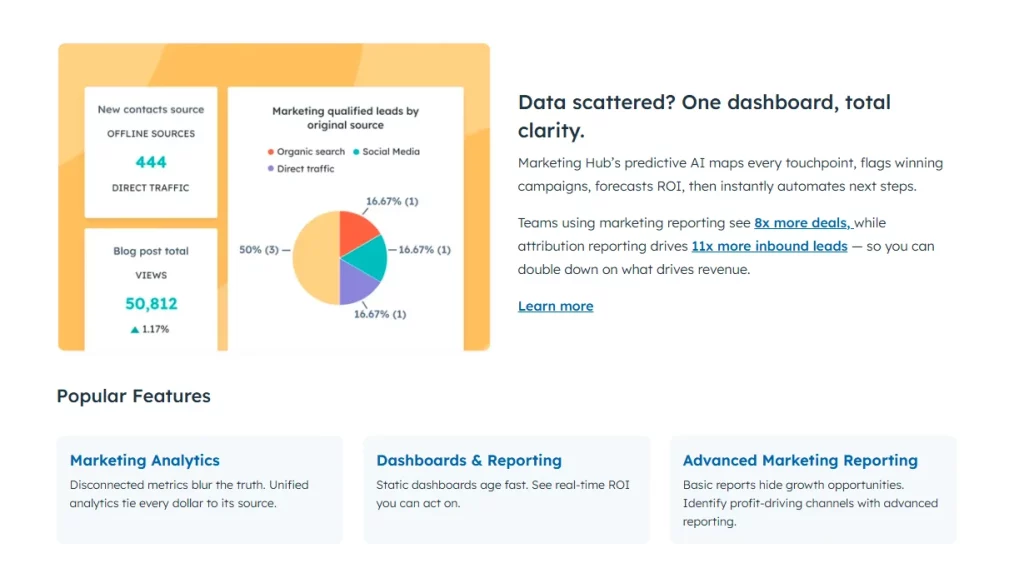
Ideal for: B2B companies with 50+ employees that want everything talking to everything else
HubSpot is a well-known CRM that brings marketing, sales, and customer service together in one platform. It’s great for businesses that want everything in one place instead of using many separate tools.
HubSpot is best for businesses that want email marketing, CRM, automation, and reporting connected in one platform.
Marketing features:
Its email marketing tools include drag-and-drop email creation, personalization, automation, A/B testing, segmentation, and performance tracking.
With HubSpot’s Marketing Hub, you can send emails, make landing pages, run social media ads, and even manage SEO and live chat. It also helps you attract new leads and grow your website traffic.
Sales tools:
The Sales Hub comes with email tracking, meeting scheduling, sales automation, and reports. You can also score leads based on how interested they are, which saves time for sales teams.
Key Strength
- Works with CRM easily: Your email data and sales data stay together in one place. No errors, no late-night syncing problems.
- Personalization:Instead, you can customize emails to each individual based on factors such as their industry, the page they visited or their location in the sales process.
- Reports: It shows which emails actually help close deals, not just the last one people clicked.
- Testing: You can try up to 5 versions of the same email and the system tells you which one works best.
Limitations:
- The cost is high. The pro plan starts at $800 per month for only 2,000 contacts.
- Email design options are limited compared to some other tools.
3. Klaviyo: Best Email Marketing Platform for E-commerce
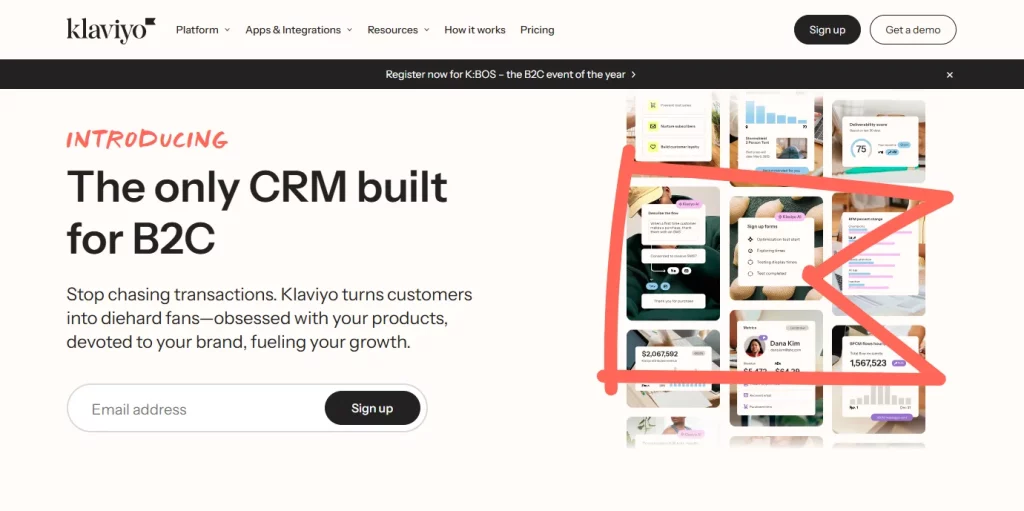
Ideal for: Online stores doing $1M+ that care about LTV (not just quick wins)
Klaviyo is a tool that lets you send emails, SMS, and mobile alerts from one dashboard. It keeps all channels connected so your message reaches customers at the right time. With ready templates, running campaigns becomes simple and fast.
Klaviyo is particularly strong for e-commerce email marketing, with segmentation, automated flows, and customer behavior-based campaigns.
Key Strengths:
- Smart Predictions: Klaviyo uses customer data to predict buying behavior, customer value, and the best time to send emails.
- Better Segmentation: You can group people based on what they actually bought. Example: “Bought shoes but not socks in the last 30 days.”
- Ready E-commerce Flows: It already has useful setups like abandoned cart emails, win-back messages, and product reminders. You just edit and use.
- SMS + Email Together: Send both texts and emails from one place, so customers get your message no matter which they prefer.
Limitations:
- Costs go up fast if you have many contacts or send lots of emails.
- Made mainly for e-commerce stores, so B2B companies may not find it a perfect fit.
- To get the best out of it, you’ll likely need someone with technical skills on your team.
Pricing Structure: Free up to 250 contacts (great for testing), then $20/month for 500 contacts with unlimited sending.
4. ActiveCampaign: Best Email Marketing Platform for Sales Automation
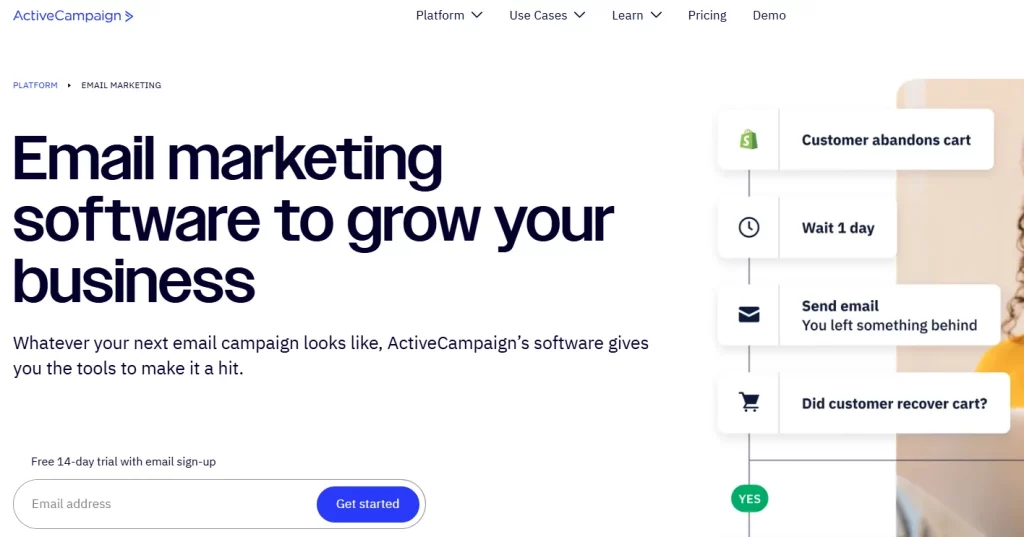
Ideal for: B2B companies where marketing and sales actually need to work together (novel concept, I know)
ActiveCampaign does more than email; this tool gives you the power of email automation tools, allowing you to send personalized messages, monitor customer activity, and even test which emails perform best.
Key Strengths:
- Sales Automation: It can update the deals, create tasks and even score leads automatically depending on how the individuals respond to your emails.
- Smart Sending: The system analyses at what time an individual tends to read his/her mails and sends mail at the optimum time.
- Easy Workflow Builder: You can drag and drop steps to create campaigns, even if you’re not technical.
- Built-in CRM: Not as advanced as Salesforce, but good enough for most teams.
Limitations:
- The dashboard may feel a bit confusing at first.
- Email templates are limited, so you might need to design your own.
- The quality of customer support depends on which plan you buy.
5. CRMOne
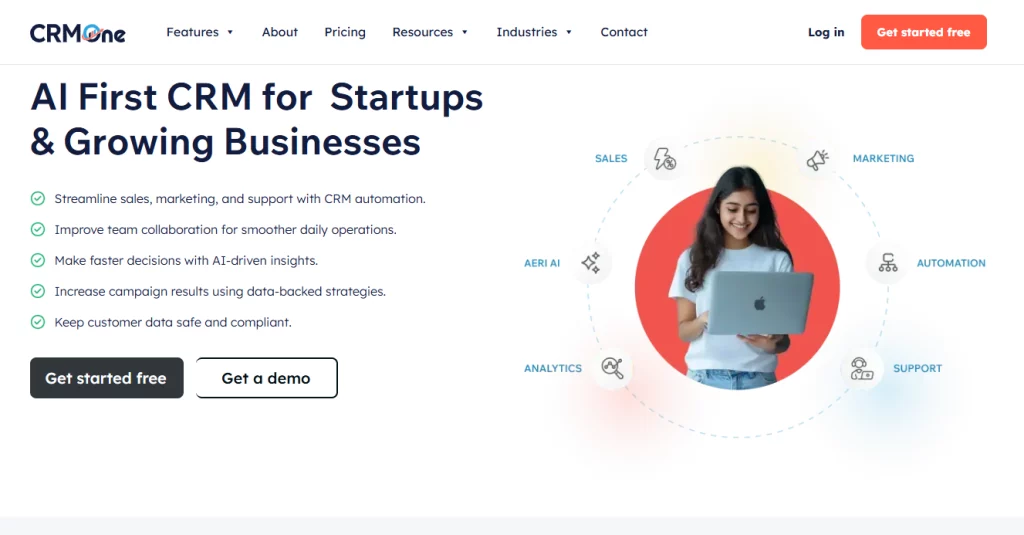
Ideal for: Businesses that don’t want to manage two different systems, one for customer management and another for email campaigns.
CRMOne is easier to use for managing email marketing and customer relationships under one platform. Teams can use the data to create targeted campaigns, automate follow-ups and track interactions without switching between different tools.
So, it is a practical choice for businesses that want email marketing automation and lead management along with CRM capabilities.
Key Strengths:
- Everything in One Place: Your sales and marketing teams see the same customer information, no unmanaged imports or data errors.
- Smarter Emails: Send follow-up emails based on what customers do, like downloading a brochure, booking a demo, or making a purchase.
- Better Teamwork: Sales knows which emails marketing sent, and marketing knows how sales followed up.
- Time-Saver: No need to waste hours syncing two different tools.
Limitations:
- It’s a newer platform, so it doesn’t yet have as many pre-built templates as Mailchimp or Klaviyo.
If you only want simple newsletters, CRMOne might feel like “too much” at first.
6. Brevo: Best Email Marketing Platform for Growing Businesses
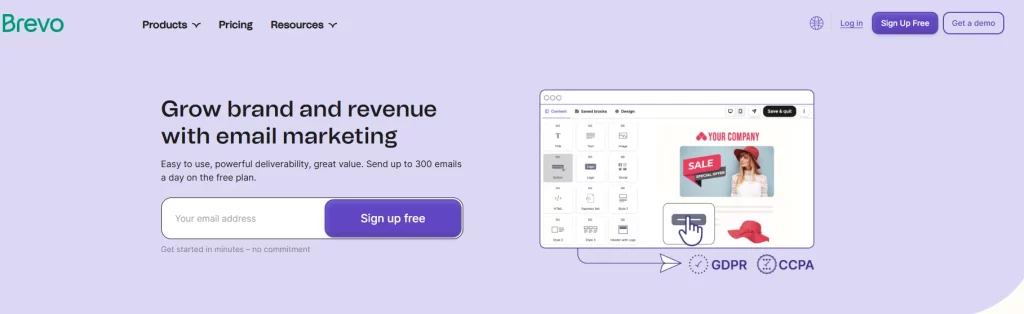
Ideal for: SMBs that want enterprise features but have startup budgets
Brevo helps businesses connect with customers through email, SMS, WhatsApp, and live chat. The automation tools can be used to manage all communication from one place.
The combination of email marketing, automation, and multi-channel communication is a great choice for small and growing businesses.
While its automation builder is simpler, it gives businesses a budget-friendly entry into email marketing automation without heavy costs.
Key Strengths:
- Free Plan: You can send up to 300 emails a day forever, with no hidden limits.
- Transactional Emails: Developers can use the API without paying extra fees.
- Multi-Channel: Email, SMS, WhatsApp, and chat — all from one place.
- Privacy-Friendly: Based in Europe, so data security and privacy are strong.
Limitations:
- he design and feel aren’t as smooth as bigger platforms.
- Doesn’t connect with as many third-party apps.
- The automation builder is a bit clunky and could be easier to use.
No Spam. No calls. Unsubscribe anytime.
7. Mailchimp: Best for Marketing Beginners
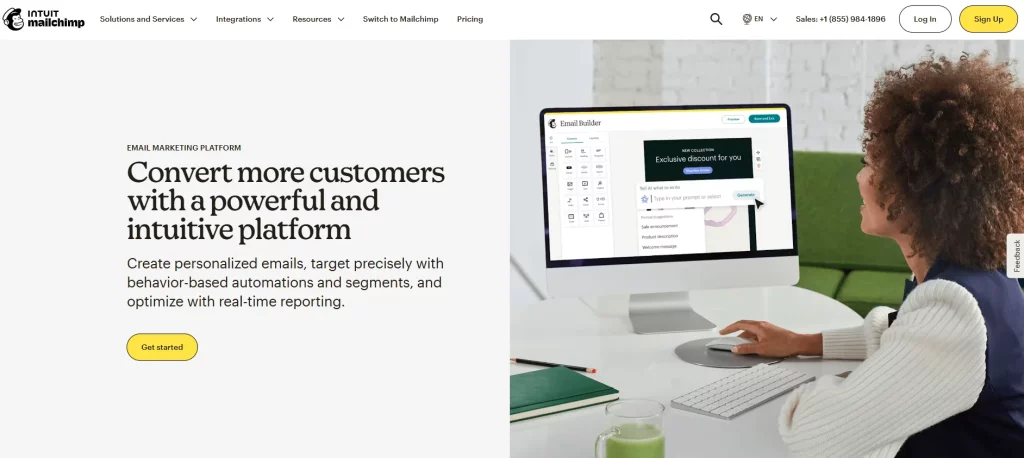
Ideal for: Small businesses and creators who just need to start sending emails already
Mailchimp is a widely-recognized email tool that can be simple to use when starting out but can be expensive when you scale. That’s why many growing brands eventually look for Mailchimp alternatives that offer more features at a lower cost.
It allows you to easily create emails using drag and drop templates, creates landing pages and sign up forms to increase your audience
You can as well be able to run an A/B testing, segment contacts, automate campaigns, and even handle social posts or advertisements using the single platform.
Key Strengths:
- Simple to Use: Even a beginner can learn it in a day.
- Content Studio: Store and manage all your images in one place to keep things consistent.
- Audience Insights: Quickly see what’s working without needing deep data skills.
- Lots of Templates: Over 100 designs to choose from, all different styles.
Limitations:
- Becomes pricey as your contact list grows.
- Automation tools are quite limited compared to other platforms.
- Customer support isn’t great on cheaper plans.
Conclusion
Choosing the right tool for sending emails is like picking the right car for a long trip. The real wins come from understanding your audience, following email deliverability best practices, and scaling smarter through personalization and segmentation.
Each tool we talked about has its own superpowers. Mailchimp is a great starting car, easy to drive, good for getting started.
Klaviyo is like a race car built for online shops, it’s super fast and helps you make more money.
HubSpot and Centripe are like big, fancy buses; they carry everything you need, from emails to sales, all in one place.
And others, such as ActiveCampaign and Brevo are those powerful, solid trucks that will make you a lot in exchange of a reasonable deal.
This is the most vital thing to bear in mind achiever: a tool can be only as good as the human who applies it. Whichever you get you use, the real trick to magic is sending emails people will read.
Frequently Asked Questions